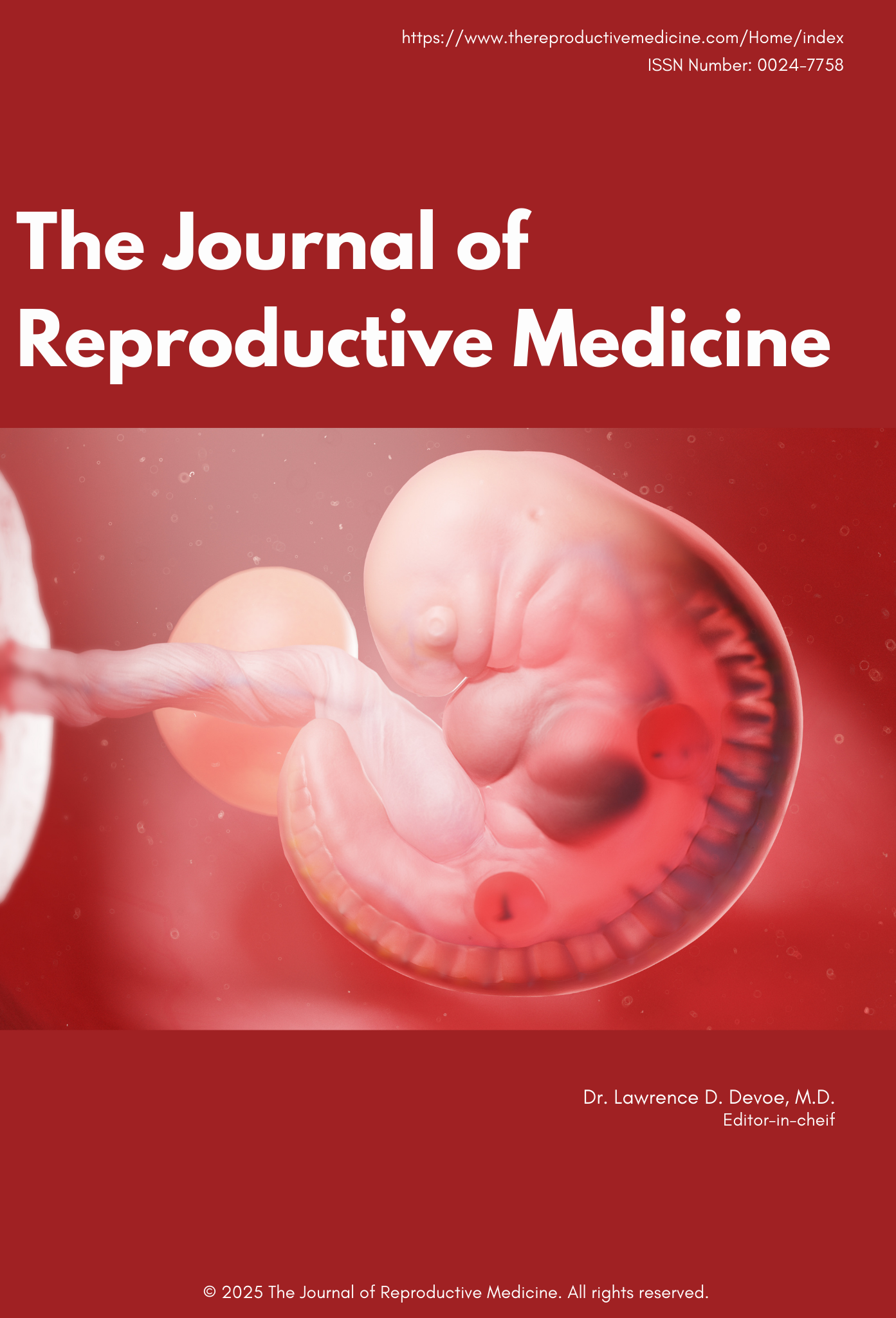
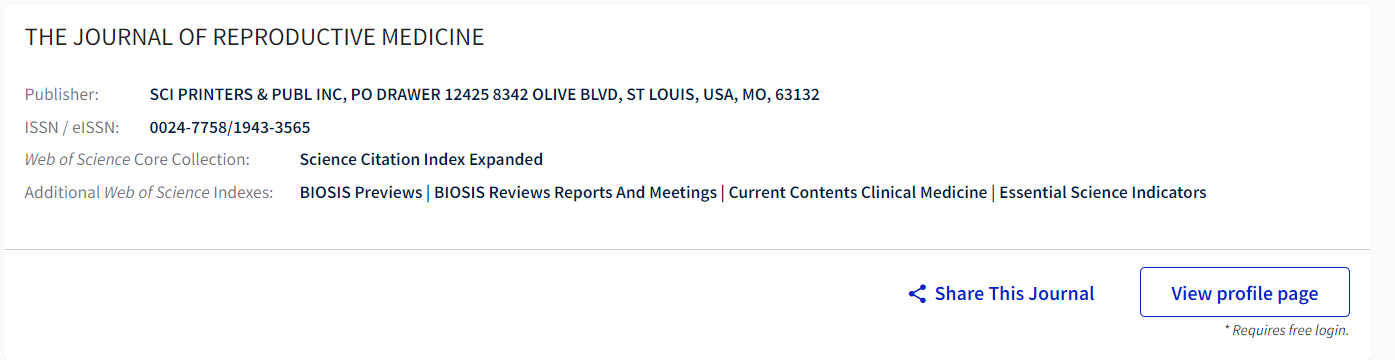
About the Journal
Journal of Reproductive Medicine is a peer-reviewed, international scientific journal dedicated to advancing knowledge and clinical practice in the field of reproductive health and medicine. The journal serves as a platform for the dissemination of high-quality research that contributes to the understanding, diagnosis, and management of reproductive disorders and related conditions.
The journal publishes original research articles, systematic reviews, meta-analyses, clinical studies, case reports, and evidence-based guidelines covering a wide spectrum of topics, including but not limited to infertility, assisted reproductive technologies (ART), reproductive endocrinology, gynecology, obstetrics, andrology, maternal–fetal medicine, and reproductive genetics.
With a strong commitment to scientific rigor and ethical publishing standards, all submissions undergo a thorough double-blind peer review process to ensure the integrity, originality, and clinical relevance of the published work. The journal aims to bridge the gap between basic science and clinical application, fostering innovation and improving patient care in reproductive medicine worldwide.
Journal of Reproductive Medicine welcomes contributions from clinicians, researchers, and healthcare professionals across the globe and strives to be a leading source of impactful research in the reproductive sciences. The journal adheres to international publishing standards and indexing requirements, ensuring wide visibility and accessibility of its content to the global scientific community.
SCOPE OF JOURNAL
JRM welcomes submissions that address the cellular, molecular, genetic, epigenetic, physiological, and morphological aspects of human and animal reproduction. The journal particularly encourages studies that contribute to the understanding of reproductive mechanisms, disease pathogenesis, diagnostic innovations, and therapeutic advancements.
The scope of the journal includes, but is not limited to, the following areas:
- Maternal–fetal medicine and reproductive biology, including placental biology and translational research involving human and relevant animal models
- Obstetrics, embryology, and pregnancy-related research, including normal and pathological gestation
- Pregnancy-related disorders, such as intrauterine growth restriction (IUGR), preeclampsia, gestational diabetes, and other complications
- Cellular and molecular mechanisms of reproduction, including signaling pathways, gene regulation, and epigenetic modifications
- Prenatal and preimplantation genetic testing and diagnosis, including advances in reproductive genetics
- Reproductive endocrinology and physiology, including hormonal regulation and reproductive function
- Reproductive immunology, focusing on immune interactions in fertility, implantation, and pregnancy
- Fertility, infertility, and clinical reproductive practice, including diagnostic and therapeutic approaches
- Assisted reproductive technologies (ART), including IVF, ICSI, fertility preservation, and emerging reproductive techniques
- Reproductive surgery and minimally invasive techniques
- Reproductive oncology and gynecology, including hormone-related cancers and their impact on fertility
- Andrology and reproductive urology, including male infertility and reproductive health
- Developmental biology, with emphasis on early embryonic development and reproductive processes
- Basic and translational research in reproduction, including animal models relevant to human reproductive health
- Epidemiology of reproductive health and disease
The journal publishes original research articles, systematic reviews, meta-analyses, clinical studies, and case reports that demonstrate scientific rigor, innovation, and clinical relevance.
By providing a platform for multidisciplinary research, JRM seeks to contribute to the advancement of reproductive science, improve clinical outcomes, and support evidence-based practice worldwide.
Benefits of Publishing with the Journal of Reproductive Medicine (JRM)
The Journal of Reproductive Medicine (JRM) is committed to maintaining the highest standards of scientific publishing and provides a robust platform for the dissemination of high-quality research. Authors publishing in JRM benefit from the following:
1. Stringent Peer Review Process
All submissions undergo a rigorous double-blind peer review by qualified experts to ensure scientific validity, methodological soundness, and academic integrity.
2. International Editorial and Reviewer Network
The journal is supported by a diverse and experienced editorial board and reviewer pool, ensuring a fair, unbiased, and globally relevant evaluation process.
3. Timely and Transparent Editorial Decisions
JRM adheres to clearly defined editorial workflows, ensuring prompt handling of manuscripts and transparent communication throughout the review process.
4. Broad Scientific Scope and Interdisciplinary Relevance
The journal encompasses a wide range of disciplines within reproductive medicine, facilitating cross-disciplinary collaboration and enhancing the translational impact of published research.
5. Adherence to International Publishing and Ethical Standards
JRM follows established guidelines and best practices in scholarly publishing, including policies on research ethics, authorship, conflict of interest, and data integrity.
6. Global Accessibility and Dissemination
The journal ensures wide accessibility of published content, promoting international readership and facilitating knowledge exchange within the scientific community.
7. Enhanced Academic Visibility and Citation Potential
Through strategic dissemination and indexing objectives, JRM aims to maximize the discoverability and citation impact of published articles.
8. Author-Centered Editorial Support
Authors receive professional guidance throughout the submission and publication process, including constructive reviewer feedback and editorial assistance.
9. Acceptance of Diverse Manuscript Types
JRM accommodates a variety of article formats, including original research, systematic reviews, meta-analyses, clinical studies, and case reports, supporting comprehensive scientific reporting.
10. Contribution to Scientific Advancement
Publication in JRM supports the advancement of reproductive medicine by disseminating evidence-based research that informs clinical practice, policy, and future investigations.